
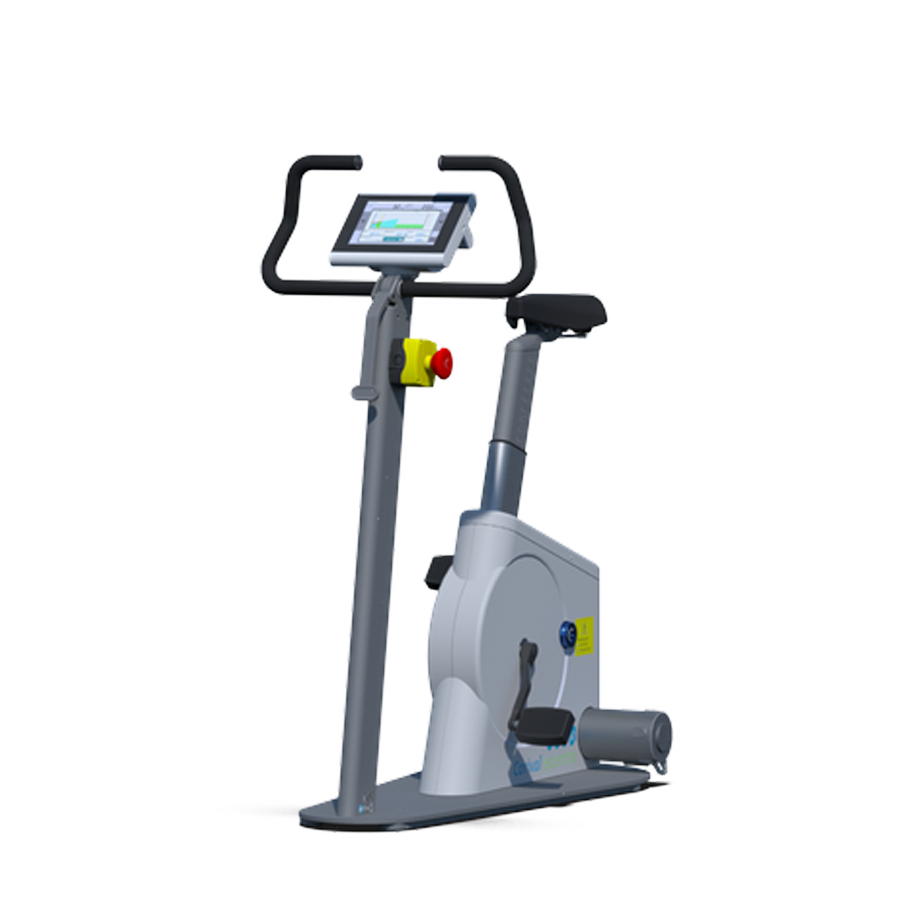
Corival Eccentric
Possibility to train severe cardiac and pulmonary patients with eccentric exercise
Eccentric ergometry or “negative ergometry” is used to train severe pulmonary and cardiac patients. The motor is pushing the crank axle of the ergometer in the opposite direction. The test subject has to resist this workload and keep the pedal frequency at a selected number to get the desired training effect.
The Eccentric Corival is an ergometer with a design like the Corival with a motor next to the usual electromagnetical braking principle. The maximal eccentric workload is 250 watt. The range of target rpm (30-100 rpm) can be customized and adjusted during the training. The eccentric ergometer has safety protections but may not be used without supervision. Besides this eccentric ergometry, this ergometer can be used for normal ergometry as well.
The ergometer is standard equipped with both a 7″ programmable control unit and a 3,5″ display.


Overview
Highlights
Reliable and reproducible stress tests
High standards
Various test modes
Q-factor equal to road-bike
Training severe cardiac and pulmonary patients
Features

Compatible with ECG and pulmonary devices

Extreme low start up load

Low noise

Accurate over a long period of time

RS232 connectivity

Readout out of saddle height

Perfect ergonomic position

Ultra-low step-through

USB connectivity

Small adjustment steps
Specifications
| Minimum load | 10 W | the minimum load the ergometer can provide | |
| Maximum peak load | 1000 W | the maximum load the ergometer can provide for a short period of time | |
| Minimum load increments | 1 W | the smallest steps with which the load can be added | |
| Maximum continuous load | 750 W | the maximum power the ergometer can deliver continuous | |
| Hyperbolic workload control | control of workload in hyperbolic way | ||
| Linear workload control | control ergometer in a linear way | ||
| Fixed torque workload control | control ergometer in a fixed torque way | ||
| Maximum rpm independent constant load | 150 rpm | rpm as to which constant load can be applied | |
| Minimum rpm independent constant load | 30 rpm | rpm as from which constant load can be applied | |
| Optional heart rate controlled workload | control the device optionally through a set heartrate | ||
| Electromagnetic "eddy current" braking system | system that very accurately applies a brake to the ergometer | ||
| Dynamic calibration | continuous calibration during application of workload | ||
| Power range at maximum rpm (maximum) | 1000 W | operational power range |
| Minimum Eccentric Load | 0 W | Minimum eccentric load the ergometer can provide | |
| Maximum Eccentric Load | 250 W | the maximum eccentric load the ergometer can provide | |
| Minimum RPM Eccentric Mode | 30 rpm | Minimum rpm in the eccentric mode | |
| Maximum RPM Eccentric Mode | 100 rpm | maximum rpm in the eccentric mode | |
| Safety Protection | Safety protection standard on ergometer |
| Workload accuracy below 100 W | 3 W | accuracy of the ergometer below 100 Watt load | |
| Workload accuracy from 100 to 500 W | 3 % | accuracy of the ergometer between 100 and 500 Watt | |
| Workload accuracy from 500 to 1000 W | 5 % | accuracy of the ergometer between 500 and 1000 Watt |
| Q-factor | 180 mm | Q-factor | |
| Minimum leg length user | 645 mm | 25.4 inch | leg length to fit to pedals |
| Allowed user weight | 180 kg | 396.8 lbs | maximum patient weight |
| Handlebar adjustment angle | 360 ° | angle over which the handlebar can rotate | |
| Adjustability range seat | 300 mm | 11.8 inch | seat adjustment range |
| English user interface | User interface available in English language | ||
| Norwegian user interface | User interface available in Norwegian language | ||
| Czech user interface | User interface available in Czech language | ||
| Danish user interface | User interface available in Danishlanguage | ||
| Dutch user interface | User interface available in Dutch language | ||
| Finnish user interface | User interface available in Finnish language | ||
| French user interface | User interface available in French language | ||
| German user interface | User interface available in German language | ||
| Italian user interface | User interface available in Italian language | ||
| Japanese user interface | User interface available in language | ||
| Korean user interface | User interface available in Korean language | ||
| Polish user interface | User interface available in Polish language | ||
| Portugese user interface | User interface available in Portugese language | ||
| Russian user interface | User interface available in Russian language | ||
| Spanish user interface | User interface available in Spanish language | ||
| Turkish user interface | User interface available in Turkish language | ||
| Ukrainian user interface | User interface available in Ukrainian language | ||
| Readout RPM | Readout the actual rpm on control unit | ||
| Readout Time | Readout time on control unit | ||
| Readout Power | Readout the actual power on control unit | ||
| Set Resistance | Possibility to define a specific resistance for each test subject | ||
| Terminal operation mode | operate with an external device | ||
| Touchscreen | operation by touch screen |
| Lode 38K4 interface protocol | Supports communication with Lode 38K4 protocol | ||
| Lode interface protocol | Supports communication according to the Lode ergometer protocol | ||
| Lode WLP interface protocol | Supports communication with Lode WLP protocol | ||
| Ergoline P10 interface protocol | Supports communication with Ergoline P10 protocol | ||
| Ergoline P4 interface protocol | Supports communication with Ergoline P4 protocol | ||
| Schiller interface protocol | Schiller-käyttöliittymäprotokolla | ||
| Bosch EKG 506 DS interface protocol | Supports communication with Bosch EKG 506 DS Protokoll | ||
| USB connector | connection via USB possible | ||
| RS232 in connector | connection via RS232 |
| Product length (cm) | 105 cm | 41.3 inch | length of product in cm |
| Product width (cm) | 46 cm | 18.1 inch | width of the product in cm |
| Product height | 114 cm | 44.9 inch | height of product |
| Product weight | 78 kg | 172 lbs | the weight of the product |
| Power cord length | 250 cm | 98.4 inch | length of powercord including plugs |
| Power cord IEC 60320 C19 with CEE 7/7 plug | European power cord and connector standard supplied with product | ||
| Power cord NEMA | NEMA power cord and connector | ||
| Max. power consumption eccentric mode | 600 W | maximum power consumption in eccentric mode |
| ISO 13485:2016 compliant | Lode fulfils ISO 13485:2016 requirements | ||
| ISO 9001:2015 compliant | Lode fulfills ISO 9001: 2015 requirements |
| Maximum operational temperature | 35 °C | maximum temperature at which the device will work within specification | |
| Minimum operational temperature | 14 °C | minimum temperature at which the device will work within specification | |
| Maximum operational air pressure | 106 kPa | maximum air pressure as from which the product will be operating within specification | |
| Minimum operational air pressure | 80 kPa | minimum airpressure as from which the product will be operating within specification | |
| Maximum operational non-condensing humidity | 90 % | maximum non-condensing humidity at which the product will operate within specification | |
| Minimum operational non-condensing humidity | 30 % | minimum non-condensing humidity at which the product will operate within specification | |
| Maximum storage & transport temperature | 60 °C | maximum temperature the product may be stored or transported at | |
| Minimum storage & transport temperature | -20 °C | minimum temperature the product may be stored and transported at | |
| Maximum storage & transport air pressure | 106 kPa | maximum air pressure the product may be stored and transported at | |
| Minimum air pressure storage & transport | 50 kPa | minimum air pressure the product may be stored or transported at | |
| Max. humidity storage & transport | 95 % | max. non-condensing humidity that the product can be stored or transported at | |
| Min. humidity storage & transport | 10 % | minimum non-condensing humidity that the product can be stored or transport at |
*Specifications are subject to change without notice.
Accessories
[wcsp_cross_sell orderby=”rand” order=”ASC” product_num=”5″ display_columns=”3″ title=”” product_id=”5930″]
Science
Science
- Development of exercise-induces arm-leg blood pressure gradient and abnormal arterial compliance in patients with repaired coarctation of the aorta.
Development of exercise-induces arm-leg blood pressure gradient and abnormal arterial compliance in patients with repaired coarctation of the aorta.
Author(s)Larry W. Markham, MD, Sandra K. Knecht, BS, Stephen R. Daniels, MD, Wayne A. Mays, RCPT, Philip R. Khoury, MS, Timothy K. Knilans, MD
Date2004-11-01
SourceVolume 94, Issue 9, 1 November 2004, Pages 1200–1202
Often, the lack of systemic arterial hypertension and the lack of a resting arm-leg blood pressure gradient are used to assess the adequacy of the anatomic result after intervention for coarctation of the aorta (CoA). Some patients with no arm-leg gradient at rest may develop a gradient with exercise, leading caregivers to question the success of the repair. It is not clear what the prevalence is of patients who have undergone a successful intervention for CoA and have no arm-leg gradient at rest but develop a significant gradient with exercise and which factors may predict the development of an arm-leg gradient with exercise. This study evaluates the prevalence and predictors of an exercise-induced arm-leg gradient in subjects who have undergone an apparently successful intervention for CoA.
- Eccentric cycle exercise in severe COPD: feasibility of application.
Eccentric cycle exercise in severe COPD: feasibility of application.
Author(s)Rocha Vieira DS1, Baril J, Richard R, Perrault H, Bourbeau J, Taivassalo T.
Date2011-07-05
SourceCOPD. 2011 Aug;8(4):270-4. doi: 10.3109/15412555.2011.579926. Epub 2011 Jul 5.
Eccentric cycling may present an interesting alternative to traditional exercise rehabilitation for patients with advanced COPD, because of the low ventilatory cost associated with lengthening muscle actions. However, due to muscle damage and soreness typically associated with eccentric exercise, there has been reluctance in using this modality in clinical populations. This study assessed the feasibility of applying an eccentric cycling protocol, based on progressive muscle overload, in six severe COPD patients with the aim of minimizing side effects and maximizing compliance. Over 5 weeks, eccentric cycling power was progressively increased in all patients from a minimal 10-Watt workload to a target intensity of 60% peak oxygen consumption (attained in a concentric modality). By 5 weeks, patients were able to cycle on average at a 7-fold higher power output relative to baseline, with heart rate being maintained at ∼85% of peak. All patients complied with the protocol and presented tolerable dyspnea and leg fatigue throughout the study; muscle soreness was minimal and did not compromise increases in power; creatine kinase remained within normal range or was slightly elevated; and most patients showed a breathing reserve > 15 L.min(-1). At the target intensity, ventilation and breathing frequency during eccentric cycling were similar to concentric cycling while power was approximately five times higher (p = 0.02). This study showed that an eccentric cycling protocol based on progressive increases in workload is feasible in severe COPD, with no side effects and high compliance, thus warranting further study into its efficacy as a training intervention.
- Eccentric exercise training in patients with chronic obstructive pulmonary disease
Eccentric exercise training in patients with chronic obstructive pulmonary disease
Author(s)J.M. Rooyackers*, D.A. Berkeljon and H.T.M. Folgering
Date2003-01-01
SourceInternational Journal of Rehabilitation Research 2003, Vol 26 No
The oxygen cost of eccentric exercise is lower than that of concentric exercise at similar work-loads. In this study, the response to eccentric cycle exercise training (EET) in addition to general exercise training (GET) on exercise performance and quality of life was investigated in 24 patients with severe chronic obstructive pulmonary disease (COPD). All patients had a normal resting PaO2 and an arterial oxygen saturation (SaO2) below 90% at Wmax, achieved during a maximal incremental concentric cycle exercise test. The patients participated in a comprehensive inpatient pulmonary rehabilitation programme of 10 weeks. They were randomly assigned either to GET (GET group: mean FEV 38% predicted) or to GET and additional EET (GET/EET group: FEV1 45% predicted). During EET, the patients were able to cycle eccentrically for 15 min continuously at a mean of 160 (69%) of Wmax whereas the Borg dyspnoea score did not exceed 3.0 and SaO2 did not fall below 90%. Parameters of cardiocirculatory fitness and gas exchange improved in the GET/EET group but no further improvement in exercise capacity occurred compared to GET. It is concluded that eccentric cycle exercise is a safe and attractive training modality for patients with severe COPD and can be performed at a high intensity without the patient becoming out of breath or needing supplemental oxygen.
- Effects of exercise intensity on lymphocyte apoptosis induced by oxidative stress in men
Effects of exercise intensity on lymphocyte apoptosis induced by oxidative stress in men
Author(s)Jong-Shyan Wang, Yu-Hsiang Huang
Date2005-11-14
SourceEuropean Journal of Applied Physiology; November 2005, Volume 95, Issue 4, pp 290-297
Exercise is linked with intensity-dependent immune response. Intracellular redox status is important in programmed cell death. This study, by closely examining 18 sedentary men who exercised moderately and severely (ie. 60% and 80% VO2max, respectively) for 40 min, investigated how exercise intensities influence intracellular redox status and oxidative stress-induced apoptosis in lymphocyte. Intracellular superoxide and reduced glutathione (GSH) levels, lipid peroxidation, mitochondrial transmembrane potential (MTP), active caspases contents, phosphotidyl serine (PS) exposure, and DNA fragmentation in lymphocytes were determined. Moreover, sublethal oxidative stress was administered by treating the lymphocyte with H2O2, to closely approximate in vivo pro-oxidative conditions. Immediately or 24 h after severe exercise, (1) lymphocyte GSH level and MTP had diminished while active caspase-8, -9, and -3 contents and DNA fragmentation had risen; and (2) H2O2 induced- lymphocyte PS exposure and DNA fragmentation were enhanced. In contrast, lymphocyte MTP, caspases activation, PS exposure, and DNA fragmentation were unaltered immediately following moderate exercise, whereas GSH level rose, lipid peroxidation diminished, and H2O2 induced- PS exposure and cell damage reduced 24 h after this exercise. These results suggest that heavy exercise diminishes lymphocyte GSH content and subsequently enhances the oxidative stress-induced apoptosis. However, moderate exercise attenuates lymphocyte apoptosis induced by oxidative stress, possibly by improving intracellular anti-oxidative capacity.
- Effects of Exercise Therapy on Cardiorespiratory Fitness in Schizophrenia Patients.
Effects of Exercise Therapy on Cardiorespiratory Fitness in Schizophrenia Patients.
Author(s)Scheewe TW, Takken T, Kahn RS, Cahn W, Backx FJ.
Date2012-02-19
SourceMed Sci Sports Exerc. 2012 Apr 19. [Epub ahead of print]
Abstract
BACKGROUND:
Increased mortality in schizophrenia is caused largely by coronary heart disease. Low cardiorespiratory fitness (CRF) is a key factor for coronary heart disease mortality. We compared CRF in patients with schizophrenia to CRF of matched, healthy controls and reference values. Also, we examined the effects of exercise therapy on CRF in schizophrenia patients and controls.
METHODS:
Sixty-three schizophrenia patients and 55 controls, matched for gender, age, and socioeconomic status, were randomized to exercise (n=31) or occupational therapy (n=32) and controls to exercise (n=27) or life-as-usual (n=28). CRF was assessed with an incremental cardiopulmonary exercise test and defined as the highest relative oxygen uptake (VO2peak) and peak work rate (Wpeak). Minimal compliance was 50% of sessions (n=52).
RESULTS:
Male and female schizophrenia patients had a relative VO2peak of 34.3 (±9.9) ml·kg·min and 24.0 (±4.5) ml·kg·min, respectively. Patients had higher resting heart rate (p<.01) and lower peak heart rate (p<.001), peak systolic blood pressure (p=.02), relative VO2peak (p<.01), Wpeak (p<.001), respiratory exchange rate (p<.001), minute ventilation (p=.02), and heart rate recovery (p<.001) than controls. Relative VO2peak was 90.5 ± 19.7% (p<.01) of predicted relative VO2peak in male and 95.9 ± 14.9% (p=.18) in female patients. In patients, exercise therapy increased relative VO2peak compared to decreased relative VO2peak after occupational therapy. In controls, relative VO2peak increased after exercise therapy and to a lesser extend after life-as-usual (group: p<.01; randomization: p=.03). Exercise therapy increased Wpeak in patients and controls compared to decreased Wpeak in nonexercising patients and controls (p<.001).
CONCLUSION:
Patients had lower CRF-levels compared to controls and reference values. Exercise therapy increased VO2peak and Wpeak in patients and controls. VO2peak and Wpeak decreased in non-exercising patients.
- Effects of positive and negative exercise on ventilatory CO2 sensitivity
Effects of positive and negative exercise on ventilatory CO2 sensitivity
Author(s)M. A. M. Hulsbosch, R. A. Binkhorst, H. Th. Folgering
Date1981-08-01
SourceEuropean Journal of Applied Physiology and Occupational Physiology, August 1981, Volume 47, Issue 1, pp 73-81
Investigations in our laboratory have shown an increased slope of the ventilatory response curve to CO2 (CO2 sensitivity) during positive and negative exercise as compared with the resting condition. CO2 sensitivity during positive and negative exercise did not differ in spite of differences in metabolism (V˙O2, V˙CO2) and type of muscle contraction (concentric or eccentric).
Various aspects of positive and negative exercise were examined in order to find out whether they can explain the identical CO2 sensitivity. Cardiac output, oxygen consumption, rectal temperature and venous catecholamine concentration appeared to be higher in positive exercise than in negative exercise, and higher in negative exercise than at rest.
However, these differences between the two types of exercise contrast with the identical CO2 sensitivity and thus cannot be of major importance in determining CO2 sensitivity. It is hypothesized that one or more of these variables might be responsible for increased CO2 sensitivity during exercise as compared with rest. The CO2 sensitivity, once increased, seems to be unaffected by further increases in these variables.
- Estimating peak oxygen uptake in adolescents with cystic fibrosis
Estimating peak oxygen uptake in adolescents with cystic fibrosis
Author(s)Werkman MS, Hulzebos EH, Helders PJ, Arets BG, Takken T.
Date2013-07-26
SourceArchives of disease in childhood
To predict peak oxygen uptake (VO2peak) from the peak work rate (Wpeak) obtained during a cycle ergometry test using the Godfrey protocol in adolescents with cystic fibrosis (CF), and assess the accuracy of the model for prognostication clustering.
METHODS:Out of our database of anthropometric, spirometric and maximal exercise data from adolescents with CF (N=363; 140 girls and 223 boys; age 14.77±1.73 years; mean expiratory volume in 1 s (FEV1%pred) 86.82±17.77%), a regression equation was developed to predict VO2peak (mL/min). Afterwards, this prediction model was validated with cardiopulmonary exercise data from another 60 adolescents with CF (28 girls, 32 boys; mean age 14.6±1.67 years; mean FEV1%pred 85.43±20.01%).
RESULTS:We developed a regression model VO2peak (mL/min)=216.3-138.7×sex (0=male; 1=female)+11.5×Wpeak; R2=0.91; SE of the estimate (SEE) 172.57. A statistically significant difference (107 mL/min; p<0.001) was found between predicted VO2peak and measured VO2peak in the validation group. However, this difference was not clinically relevant because the difference was within the SEE of the model. Furthermore, we found high positive predictive and negative predictive values for the model for prognostication clustering (PPV 50-87% vs NPV 82-94%).
CONCLUSIONS:In the absence of direct VO2peak assessment it is possible to estimate VO2peak in adolescents with CF using only a cycle ergometer. Furthermore, the regression model showed to be able to discriminate patients in different prognosis clusters based on exercise capacity.
KEYWORDS:Cystic Fibrosis, Exercise, Paediatric Lung Disaese
- Exercise capacity in children with isolated congenital complete atrioventricularblock: does pacing make a difference?
Exercise capacity in children with isolated congenital complete atrioventricularblock: does pacing make a difference?
Author(s)Blank AC, Hakim S, Strengers JL, Tanke RB, van Veen TA, Vos MA, Takken T.
Date2012-02-14
SourcePediatr Cardiol. 2012;33(4):576-85.
Abstract
The management of patients with isolated congenital complete atrioventricular block (CCAVB) has changed during the last decades. The current policy is to pace the majority of patients based on a variety of criteria, among which is limited exercise capacity. Data regarding exercise capacity in this population stems from previous publications reporting small case series of unpaced patients. Therefore, we have investigated the exercise capacity of a group of contemporary children with CCAVB. Sixteen children (mean age 11.5 ± 4; seven boys, nine girls) with CCAVB were tested. In 13 patients, a median number of three pacemakers were implanted, whereas in three patients no pacemaker was given. All patients had an echocardiogram and completed a cardiopulmonary cycle exercise test. Exercise parameters were determined and compared with reference values obtained from healthy Dutch peers. The peak oxygen uptake/body mass was reduced to 34.4 ± 9.5 ml kg(-1) min(-1) (79 ± 24% of predicted) and the ventilatory threshold was reduced to 52 ± 17% of peak oxygen uptake (78 ± 21% of predicted), whereas the peak work load/body mass was 2.8 ± 0.6 W/kg (91 ± 24% of predicted), which was similar to controls. Importantly, 25% of the paced patients showed upper rate restriction by the pacemaker. In conclusion, children with CCAVB show a reduced peak oxygen uptake and ventilatory threshold, whereas they show normal peak work rates. This indicates that they generate more energy during exercise from anaerobic energy sources. Paced children with CCAVB do not perform better than unpaced children.
- Habitual physical activity in Dutch children and adolescents with haemophilia.
Habitual physical activity in Dutch children and adolescents with haemophilia.
Author(s)Groen WG, Takken T, van der Net J, Helders PJ, Fischer K.
Date2011-01-01
SourceHaemophilia. 2011;17(5):e906-12.
Abstract
For patients with haemophilia, a physically active lifestyle is important to maintain musculoskeletal health and to prevent chronic diseases, such as cardiovascular disease. Therefore, we studied physical activity levels, in Dutch children and adolescents with haemophilia as well as its association with aerobic fitness and joint health. Forty-seven boys with haemophilia (aged 8-18) participated. Physical activity was measured using the Modifiable Activity Questionnaire (MAQ) and was compared with the general population. Aerobic fitness was determined using peak oxygen uptake (VO(?peak)). Joint health was measured using the Haemophilia Joint Health Score (HJHS). Associations between physical activity, joint health and aerobic fitness were evaluated by correlation analysis. Subjects were 12.5 (SD 2.9) years old, had a Body Mass Index (BMI) of 19.5 (SD 3.1; z-score 0.5) and a median HJHS score of 0 (range 0-6). Cycling, physical education and swimming were most frequently reported (86%, 69% and 50% respectively). Children with severe haemophilia participated significantly less in competitive soccer and more in swimming than children with non-severe haemophilia. Physical activity levels were similar across haemophilia severities and comparable to the general population. VO(?peak) kg?¹ was slightly lower than healthy boys (42.9 ± 8.6 vs. 46.9 ± 1.9 mL kg?¹ min?¹; P = 0.03). Joint health, aerobic fitness and physical activity showed no correlation. Dutch children with haemophilia engaged in a wide range of activities of different intensities and showed comparable levels of physical activity to the general population. Aerobic fitness was well preserved and showed no associations with physical activity levels or joint health. - Human critical power-oxygen uptake relationship at different pedaling frequencies
Human critical power-oxygen uptake relationship at different pedaling frequencies
Author(s)Tyler Barker, David C. Poole, M. Larry Noble, Thomas J. Barstow
Date2006-09-10
SourceExperiomental Physiology, 2006, 91, 621-632
Critical power (CP) is lower at faster rather than slower pedalling frequencies and traditionally reported in watts (W). Faster pedalling frequencies also engender a greater metabolic rate at low work rates, but with progressive increases in power output, the initial difference in between fast and slower pedalling frequencies is reduced. We tested the hypothesis that CP represents a unique metabolic rate for any given individual which would be similar at different pedalling frequencies. Eleven collegiate athletes (five cross-country runners, END; six sprinters, SPR), aged 18–23 years, performed exhaustive rides at either 60 or 100 r.p.m. on separate days for the determination of the pedal rate-specific CP. The at CP (CP- ) was determined from an 8 min ride at the CP for each pedal frequency. The group mean CP was significantly lower at 100 r.p.m. (189 ± 50 W) compared to 60 r.p.m. (207 ± 53 W, P < 0.05). However, the group mean CP- values at 60 (2.53 ± 0.60 l min−1) and 100 r.p.m. (2.58 ± 0.53 l min−1) were not significantly different. Critical power was significantly higher in the END athletes (242 ± 50 W at 60 r.p.m.; 221 ± 56 W at 100 r.p.m.) compared to SPR athletes at both pedal frequencies (177 ± 38 W at 60 r.p.m.; 162 ± 27 W at 100 r.p.m., P < 0.05), but the CP- was not (P > 0.05). However, when the CP- was scaled to body weight, the END athletes had a significantly greater CP- (41.3 ± 4.1 ml min−1 kg−1 at 60 r.p.m.; 40.8 ± 5.5 ml min−1 kg−1 at 100 r.p.m.) compared to the SPR athletes at both pedal frequencies (27.7 ± 4.6 ml min−1 kg−1 at 60 r.p.m.; 29.4 ± 2.8 ml min−1 kg−1 at 100 r.p.m., P < 0.05). We conclude that CP represents a specific metabolic rate which can be achieved at different combinations of power outputs and pedalling frequencies.
- Influence of carvedilol on the benefits of physical training in patients with moderate chronic heart failure
Influence of carvedilol on the benefits of physical training in patients with moderate chronic heart failure
Author(s)J.F. Forissier, P. Vernochet, P. Bertrand, B. Charbonnier, C. Ponpère
Date2001-05-08
SourceEuropean Journal of Heart Failure 3 (2001) 335-342
Aims: To evaluate prospectively the impact of carvedilol on a short-term physical training program in stable patients with moderate chronic heart failure (CHF), and to analyze parameters predictive of improvement after training.
Methods and results: Thirty-eight patients with CHF were referred for cardiac rehabilitation. Etiology was ischemic in 26 patients, dilated in 12 patients and left ventricular ejection fraction was < 35%. Patients were classified into three groups: group 1 (n = 14) = ACE inhibitors, diuretics and digitalis; group 2 (n = 11) = idem group 1+cardioselective beta-blocker; group 3 (n = 13) = idem group 1+carvedilol. Exercise tests with VO2 measurement were performed before and after a 4-week exercise training program. Patients with carvedilol experienced a 16.6% increase in peak VO2 which was similar to the 13.9% increase in the group with cardioselective beta-blocker and to the 18.5% in the group without beta-blocker. Moreover non-ischemic etiology of CHF was the only parameter predictive of improvement after training (P = 0.02).
Conclusions: Addition of carvedilol did not alter benefits of a short-term physical training program in patients with moderate CHF. No baseline characteristic except for etiology of CHF was predictive of a response to training. - Muscle deoxygenation to VO2 relationship differs in young subjects with varying τVO2
Muscle deoxygenation to VO2 relationship differs in young subjects with varying τVO2
Author(s)Juan M. Murias, Matthew D. Spencer, John M. Kowalchuk, Donald H. Paterson.
Date2011-12-19
SourceEuropean Journal of Applied Physiology
The relationship between the adjustment of muscle deoxygenation (∆[HHb]) and phase II VO2p was examined in subjects presenting with a range of slow to fast VO2p kinetics. Moderate intensity VO2pand ∆[HHb] kinetics were examined in 37 young males (24 ± 4 years). VO2p was measured breath-by-breath. Changes in ∆[HHb] of the vastus lateralis muscle were measured by near-infrared spectroscopy. VO2p and ∆[HHb] response profiles were fit using a mono-exponential model, and scaled to a relative % of the response (0–100%). The ∆[HHb]/∆VO2p ratio for each individual (reflecting the matching of O2 distribution to O2 utilization) was calculated as the average ∆[HHb]/∆VO2p response from 20 to 120 s during the exercise on-transient. Subjects were grouped based on individual phase II VO2p time-constant (τVO2p): <21 s [very fast (VF)]; 21–30 s [fast (F)]; 31–40 s [moderate (M)]; >41 s [slow (S)]. The corresponding ∆[HHb]/∆VO2p were 0.98 (VF), 1.05 (F), 1.09 (M), and 1.22 (S). The larger ∆[HHb]/∆VO2p in the groups with slower VO2p kinetics resulted in the ∆[HHb]/∆VO2p displaying a transient “overshoot” relative to the subsequent steady state level, which was progressively reduced as τVO2 became smaller (r = 0.91). When τVO2p > ~20 s, the rate of adjustment of phase II VO2p appears to be mainly constrained by the matching of local O2distribution to muscle VO2. These data suggest that in subjects with “slower” VO2 kinetics, the rate of adjustment of VO2 may be constrained by O2 availability within the active tissues related to the matching of microvascular O2 distribution to muscle O2 utilization.
- Near-infrared spectroscopy during exercise and recovery in children with juvenile Dermatomyositis.
Near-infrared spectroscopy during exercise and recovery in children with juvenile Dermatomyositis.
Author(s)Habers G.E., De Knikker R, van BrusselM, HulzebosHJ, StegemanDF, van RoyenA, Takken T.
Date2012-01-01
SourceMuscle Nerve. 2012.
Abstract
BACKGROUND
We hypothesized that microvascular disturbances in muscle tissue play a role in the reduced exercise capacity in juvenile dermatomyositis (JDM).
METHODS
Children with JDM, children with juvenile idiopathic arthritis (clinical controls), and healthy children performed a maximal incremental cycloergometric test from which normalized concentration changes in oxygenated hemoglobin (?[O2Hb]) and total hemoglobin (?[tHb]) as well as the half recovery times of both signals were determined from the vastus medialis and vastus lateralis muscles using near-infrared spectroscopy.
RESULTS
Children with JDM had lower ?[tHb] values in the vastus medialis at work rates of 25%, 50%, 75%, and 100% of maximal compared with healthy children; the increase in ?[tHb] with increasing intensity seen in healthy children was absent in children with JDM. Other outcome measures differed not by group.
DISCUSSION
The results suggest that children with JDM may experience difficulties in increasing muscle blood volume with more strenuous exercise. - Respiratory Gas Exchange During Exercise in Children with Congenital Heart Disease: Methodology and Clinical Concepts.
Respiratory Gas Exchange During Exercise in Children with Congenital Heart Disease: Methodology and Clinical Concepts.
Author(s)Takken T, Blank AC, Hulzebos H
Date2011-08-01
SourceCurrent Respiratory Medicine Reviews. 2011; 7: 87-96.
Cardiopulmonary exercise testing (CPET) in pediatric patients differs in many aspects from the tests as performed in adults. Children’s cardiopulmonary responses during exercise testing present different characteristics, particularly indices of respiratory gas exchange (e.g. oxygen uptake, ventilation and ventilatory efficiency), which are essential in interpreting hemodynamic data. Diseases that are associated with myocardial ischemia are very rare in children. Important indications for CPET in children are the evaluation of exercise capacity and the non-invasive identification of pathologic features. In this article we will review the methodology, and clinical concepts exercise testing and interpretation of respiratory gas-exchange during exercise in children with congenital heart disease.
- Role of exercise intensities in oxidized low-density lipoprotein-mediated redox status of monocyte in men
Role of exercise intensities in oxidized low-density lipoprotein-mediated redox status of monocyte in men
Author(s)Jong-Shyan Wang, Tan Lee, Shu-Er Chow
Date2006-09-11
SourceJournal of Applied Physiology September 2006 vol. 101 no. 3 740-744
Exercise significantly influences the progression of atherosclerosis. Oxidized LDL (ox-LDL), as a stimulator of oxidative stress, facilitates monocyte-related atherogenesis. This study investigates how exercise intensity impacts ox-LDL-mediated redox status of monocytes. Twenty-five sedentary healthy men exercised mildly, moderately, and heavily (i.e., 40, 60, and 80% maximal oxygen consumption, respectively) on a bicycle ergometer. Reactive oxygen species (ROS) production, cytosolic and mitochondrial superoxide dismutase (c-SOD and m-SOD, respectively) activities, and total and reduced-form γ-glutamylcysteinyl glycine (t-GSH and r-GSH, respectively) contents in monocytes mediated by ox-LDL were measured. This experiment obtained the following findings: 1) ox-LDL increased monocyte ROS production and was accompanied by decreased c-SOD and m-SOD activities, as well as t-GSH and r-GSH contents, whereas treating monocytes with diphenyleneiodonium (DPI) (a NADPH oxidase inhibitor) or rotenone/2-thenoyltrifluoroacetone (TTFA) (mitochondrial complex I/II inhibitors) hindered ox-LDL-induced monocyte ROS production; 2) production of ROS and reduction of m-SOD activity and r-GSH content in monocyte by ox-LDL were enhanced by heavy exercise and depressed by mild and moderate exercise; and 3) heavy exercise augmented the inhibition of ox-LDL-induced monocyte ROS production by DPI and rotenone/TTFA, whereas these DPI- and rotenone/TTFA-mediated monocyte ROS productions were unchanged in response to mild and moderate exercise. We conclude that heavy exercise increases ox-LDL-induced monocyte ROS production, possibly by decreasing m-SOD activity and r-GSH content in monocytes. However, mild and moderate exercise likely protects individuals against suppression of anti-oxidative capacity of monocyte by ox-LDL.
- Speeding of V̇O2 kinetics with endurance training in old and young men is associated with improved matching of local O2 delivery to muscle O2 utilization
Speeding of V̇O2 kinetics with endurance training in old and young men is associated with improved matching of local O2 delivery to muscle O2 utilization
Author(s)Juan M. Murias, John M. Kowalchuk, Donald H. Paterson
Date2010-04-01
SourceJournal of Applied Physiology; April 1st, 2010. Vol 108 no. 4 913-922
The time course and mechanisms of adjustment of pulmonary oxygen uptake (V̇O2) kinetics (time constant τV̇O2p) were examined during step transitions from 20 W to moderate-intensity cycling in eight older men (O; 68 ± 7 yr) and eight young men (Y; 23 ± 5 yr) before training and at 3, 6, 9, and 12 wk of endurance training. V̇O2p was measured breath by breath with a volume turbine and a mass spectrometer. Changes in deoxygenated hemoglobin concentration (Δ[HHb]) were measured by near-infrared spectroscopy. V̇O2p and Δ[HHb] were modeled with a monoexponential model. Training was performed on a cycle ergometer three times per week for 45 min at ∼70% of peak V̇O2. Pretraining τV̇O2p was greater (P< 0.05) in O (43 ± 10 s) than Y (34 ± 8 s). τV̇O2p decreased (P < 0.05) by 3 wk of training in both O (35 ± 9 s) and Y (22 ± 8 s), with no further changes thereafter. The pretraining overall adjustment of Δ[HHb] was faster than τV̇O2p in both O and Y, resulting in Δ[HHb]/V̇O2p displaying an “overshoot” during the transient relative to the subsequent steady-state level. After 3 wk of training the Δ[HHb]/V̇O2p overshoot was attenuated in both O and Y. With further training, this overshoot persisted in O but was eliminated after 6 wk in Y. The training-induced speeding of V̇O2p kinetics in O and Y at 3 wk of training was associated with an improved matching of local O2 delivery to muscle V̇O2 (as represented by a lower Δ[HHb]/V̇O2p). The continued overshoot in Δ[HHb]/V̇O2p in O may reflect a reduced vasodilatory responsiveness that may limit muscle blood flow distribution during the on-transient of exercise.
- Supramaximal Verification of Peak Oxygen Uptake in Adolescents With Cystic Fibrosis
Supramaximal Verification of Peak Oxygen Uptake in Adolescents With Cystic Fibrosis
Author(s)Werkman MS, Hulzebos HJ, van de Weert-van Leeuwen PB, Arets HGM, Helders, PJM, Takken T.
Date2011-01-01
SourcePed Phys Ther. 2011; 23(1): 15-21
Abstract
PURPOSE: To study whether peak oxygen uptake ((Equation is included in full-text article VO??peak), attained in traditional cardiopulmonary exercise testing (CPET) in adolescents with cystic fibrosis (CF), could be verified by a supramaximal exercise test.METHODS: Sixteen adolescents with CF (forced expiratory volume in 1 second as % of predicted [range, 45%-117%]) volunteered and successively performed CPET and a supramaximal test (Steep Ramp Test [SRT] protocol).
RESULTS: Cardiopulmonary exercise testing and the SRT resulted in comparable cardiorespiratory peak values. We found no significant difference in oxygen uptake ((Equation is included in full-text article VO??peak/kg) between CPET and the SRT (38.9 ± 7.4 and 38.8 ± 8.5 mL min kg, respectively; P = .81). We found no systemic bias for CPET and SRT measurements of (Equation is included in full-text article VO???peak/kg and no differences between CPET and SRT (Equation is included in full-text article VO???peak values within and between the maximal and non-maximal effort groups (P > .4).
CONCLUSION: The (Equation is included in full-text article VO???peak measured in CPET seems to reflect the true (Equation is included in full-text article.)O2?peak in adolescents with CF.
- The Effect of Acute Exercise on Serum Brain-Derived Neurotrophic Factor Levels and Cognitive Function
The Effect of Acute Exercise on Serum Brain-Derived Neurotrophic Factor Levels and Cognitive Function
Author(s)Lee T. Ferris, James S. Williams, Chwan-Li Shen
Date2007-10-01
SourceMedicine and Science in Sports and Exercise, Vol. 39, No. 4, pp. 728–734, 2007
Previous studies using animals have demonstrated that acute and chronic exercise leads to increases in BDNF in various brain regions. Purpose: To determine the effects of acute exercise on serum BDNF levels in humans, and to determine the relationship between exercise intensity and BDNF responses. Additionally, the relationship between changes in BDNF and cognitive function was examined. Methods: Fifteen subjects (25.4 ± 1.01 yr; 11 male, 4 female) performed a graded exercise test (GXT) for the determination of V˙O2max and ventilatory threshold (VTh) on a cycle ergometer. On separate days, two subsequent 30-min endurance rides were performed at 20% below the VTh (VTh – 20) and at 10% above the VTh (VTh + 10). Serum BDNF and cognitive function were determined before and after the GXT and endurance rides with an enzyme-linked immunosorbent assay (ELISA) and the Stroop tests, respectively. Results: The mean V˙O2max was 2805.8 ± 164.3 mL•min-1 (104.2 ± 7.0% pred). BDNF values (pg•mL-1) increased from baseline (P < 0.05) after exercise at the VTh + 10 (13%) and the GXT (30%). There was no significant change in BDNF from baseline after the VTh – 20. Changes in BDNF did not correlate with V˙O2max during the GXT, but they did correlate with changes in lactate (r = 0.57; P < 0.05). Cognitive function scores improved after all exercise conditions, but they did not correlate with BDNF changes. Conclusion: BDNF
levels in humans are significantly elevated in response to exercise, and the magnitude of increase is exercise intensity dependent. Given that BDNF can transit the blood–brain barrier in both directions, the intensity-dependent findings may aid in designing exercise prescriptions for maintaining or improving neurological health. - The Steep Ramp Test in Dutch Caucasian Children and Adolescents: Age- and Sex- Related Normative Values
The Steep Ramp Test in Dutch Caucasian Children and Adolescents: Age- and Sex- Related Normative Values
Author(s)Bongers BC, de Vries SI, Obeid J, van Buuren S, Helders PJ, Takken T
Date2013-05-30
SourcePhysical Therapy
BACKGROUND:
The steep ramp test (SRT) is a feasible, reliable, and valid exercise test on a cycle ergometer that may be more appealing for use in children in daily clinical practice than the traditional cardiopulmonary exercise test, because of its short duration, its resemblance to children’s daily activity pattern and the fact that it does not require respiratory gas analysis.
OBJECTIVE:The aim of the current study was to provide sex- and age-related norm values for SRT performance in healthy Dutch Caucasian children and adolescents between the ages of 8 and 19 years.
DESIGN:This was a cross-sectional, observational study.
METHODS:Two hundred and fifty-two Dutch Caucasian children and adolescents, 118 boys (mean age 13.4 (3.0) years) and 134 girls (mean age 13.4 (2.9) years), performed a SRT (work rate increments of 10, 15, or 20 W·10 s-1, depending on body height) to voluntary exhaustion to assess peak work rate (WRpeak). Norm values are presented as reference centiles developed using generalized additive models for location, scale, and shape (GAMLSS).
RESULTS:WRpeak correlated highly with age (r=0.915 and r=0.811), body mass (r=0.870 and r=0.850), body height (r=0.922 and r=0.896), body surface area (r=0.906 and r=0.885), and fat free mass (r=0.930 and r=0.902), for boys and girls respectively (P<0.001 for all coefficients). The reference curves demonstrated an almost linear increase with age in WRpeak in boys, even when normalized for body mass. In contrast, absolute WRpeak in girls increased constantly until the age of approximately 13 years, where after WRpeak started to level off. WRpeak normalized for body mass showed only a slight increase with age in girls, with a slight decrease in relative WRpeak as of the age of 14 years.
LIMITATIONS:The sample may not be entirely representative of the Dutch population.
CONCLUSIONS:The current study provides sex- and age-related norm values for SRT performance for both absolute and relative WRpeak thereby facilitating the interpretation of SRT results for clinicians and researchers.
- The steep ramp test in healthy children and adolescents: reliability and validity.
The steep ramp test in healthy children and adolescents: reliability and validity.
Author(s)Bart C. Bongers, Sanne de Vries, Paul J.M. Helders and Tim Takken
Date2013-02-24
SourceMedicine and Science in Sports and Exercise
Abstract
PURPOSE:This study aimed to examine the reliability and validity of the steep ramp test (SRT), a feasible, maximal exercise test on a cycle ergometer that does not require the use of respiratory gas analysis, in healthy children and adolescents.
METHODS:Seventy-five children were randomly divided in a reliability group (n = 37, 17 boys and 20 girls; mean ± SD age = 13.86 ± 3.22 yr), which performed two SRTs within 2 wk, and a validity group (n = 38, 17 boys and 21 girls; mean ± SD age = 13.85 ± 3.20 yr), which performed both an SRT and a regular cardiopulmonary exercise test (CPET) with respiratory gas analysis within 2 wk. Peak work rate (WRpeak) was the main outcome of the SRT. Peak oxygen uptake (VO2peak) was the main outcome of the CPET. Reliability was examined with the intraclass correlation coefficient and a Bland and Altman plot, whereas validity was assessed using Pearson correlation coefficients and stepwise linear regression analysis.
RESULTS:Reliability statistics for the WRpeak values attained at the two SRTs showed an intraclass correlation coefficient of 0.986 (P < 0.001). The average difference between the two SRTs was -6.4 W, with limits of agreement between +24.5 and -37.5 W. A high correlation between WRpeak attained at the SRT and the V?O2peak achieved during the CPET was found (r = 0.958; P < 0.001). Stepwise linear regression analysis provided the following prediction equation: VO2peak (mL·min) = (8.262 WRpeak SRT) + 177.096 (R2 = 0.917, SEE = 237.4).
CONCLUSION:The results suggest that the SRT is a reliable and valid exercise test in healthy children and adolescents, which can be used to predict VO2peak.
- Time course and mechanisms of adaptations in cardiorespiratory fitness with endurance training in older and young men
Time course and mechanisms of adaptations in cardiorespiratory fitness with endurance training in older and young men
Author(s)Juan M. Murias, John M. Kowalchuk, Donals H. Paterson
Date2010-03-01
SourceJournal of Applied Physiology March 1, 2010vol. 108 no. 3 621-627
The time-course and mechanisms of adaptation of cardiorespiratory fitness were examined in 8 older (O) (68 ± 7 yr old) and 8 young (Y) (23 ± 5 yr old) men pretraining and at 3, 6, 9, and 12 wk of training. Training was performed on a cycle ergometer three times per week for 45 min at ∼70% of maximal oxygen uptake (V̇O2 max). V̇O2 max increased within 3 wk with further increases observed posttraining in both O (+31%) and Y (+18%), (P < 0.05). Maximal cardiac output (Q̇max, open-circuit acetylene) and stroke volume were higher in O and Y after 3 wk with further increases after 9 wk of training (P < 0.05). Maximal arterial-venous oxygen difference (a-vO2diff) was higher at weeks 3 and 6 and posttraining compared with pretraining in O and Y (P < 0.05). In O, ∼69% of the increase in V̇O2 max from pre- to posttraining was explained by an increased Q̇max with the remaining ∼31% explained by a widened a-vO2diff. This proportion of Q̇ and a-vO2diff contributions to the increase in V̇O2 max was consistent throughout testing in O. In Y, 56% of the pre- to posttraining increase in V̇O2 maxwas attributed to a greater Q̇max and 44% to a widened a-vO2diff. Early adaptations (first 3 wk) mainly relied on a widened maximal a-vO2diff (∼66%) whereas further increases in V̇O2 max were exclusively explained by a greater Q̇max. In conclusion, with short-term training O and Y significantly increased their V̇O2 max; however, the proportion of V̇O2 max increase explained by Q̇maxand maximal a-vO2diff throughout training showed a different pattern by age group.
- Towards an individualized protocol for workload increments in cardiopulmonary exercise testing in children and adolescents with cystic fibrosis.
Towards an individualized protocol for workload increments in cardiopulmonary exercise testing in children and adolescents with cystic fibrosis.
Author(s)Hulzebos HJ, Werkman MS, van Brussel M, Takken T.
Date2012-06-14
SourceJ Cyst Fibros. 2012
BACKGROUND:
There is no single optimal exercise testing protocol for children and adolescents with cystic fibrosis (CF) that differs widely in age and disease status. The aim of this study was to develop a CF-specific, individualized approach to determine workload increments for a cycle ergometry testing protocol.
METHODS:
A total of 409 assessments consisting of maximal exercise data, anthropometric parameters, and lung function measures from 160 children and adolescents with CF were examined. 90% of the database was analyzed with backward linear regression with peak workload (W(peak)) as the dependent variable. Afterwards, we [1] used the remaining 10% of the database (model validation group) to validate the model’s capacity to predict W(peak) and [2] validated the protocol’s ability to provide a maximal effort within a 10±2minute time frame in 14 adolescents with CF who were tested using this new protocol (protocol validation group).
RESULTS:
No significant differences were seen in W(peak) and predicted W(peak) in the model validation group or in the protocol validation group. Eight of 14 adolescents with CF in the protocol validation group performed a maximal effort, and seven of them terminated the test within the 10±2minute time frame. Backward linear regression analysis resulted in the following equation: W(peak) (W)=-142.865+2.998×Age (years)-19.206×Sex (0=male; 1=female)+1.328×Height (cm)+23.362×FEV(1) (L) (R=.89; R(2)=.79; SEE=21). Bland-Altman analysis showed no systematic bias between the actual and predicted W(peak).
CONCLUSION:
We developed a CF-specific linear regression model to predict peak workload based on standard measures of anthropometry and FEV(1), which could be used to calculate individualized workload increments for a cycle ergometry testing protocol.
- Validity of the oxygen uptake efficiency slope in children with cystic fibrosis and mild-to-moderate airflow obstruction.
Validity of the oxygen uptake efficiency slope in children with cystic fibrosis and mild-to-moderate airflow obstruction.
Author(s)Bongers BC, Hulzebos E HJ, Arets B GM, Takken T.
Date2012-02-01
SourcePediatr Exerc Sci. 2012;24(1):129-41.
Abstract
PURPOSE:
The oxygen uptake efficiency slope (OUES) has been proposed as an ‘effort-independent’ measure of cardiopulmonary exercise capacity, which could be used as an alternative measurement for peak oxygen uptake (VO(2peak)) in populations unable or unwilling to perform maximal exercise. The aim of the current study was to investigate the validity of the OUES in children with cystic fibrosis (CF).
METHODS:
Exercise data of 22 children with CF and mild to moderate airflow obstruction were analyzed and compared with exercise data of 22 healthy children. The OUES was calculated using data up to three different relative exercise intensities, namely 50%, 75%, and 100% of the total exercise duration, and normalized for body surface area (BSA).
RESULTS:
Only the OUES/BSA using the first 50% of the total exercise duration was significantly different between the groups. OUES/BSA values determined at different exercise intensities differed significantly within patients with CF and correlated only moderately with VO(2peak) and the ventilatory threshold.
CONCLUSION:
The OUES is not a valid submaximal measure of cardiopulmonary exercise capacity in children with mild to moderate CF, due to its limited distinguishing properties, its nonlinearity throughout progressive exercise, and its moderate correlation with VO(2peak) and the ventilatory threshold.
- Ventilatory response to positive and negative work in patients with chronic obstructive pulmonary disease
Ventilatory response to positive and negative work in patients with chronic obstructive pulmonary disease
Author(s)J. M. ROOYACKERS, P. N. R. DEKHUIJZEN, C. L. A. VAN HERWAARDEN AND H. T. M. FOLGERING
Date1997-01-01
SourceRESPIRATORY MEDICINE (1997) 91, 143-149
In healthy subjects, oxygen consumption and cardiorespiratory responses are lower during eccentric exercise (negative work, II’,& than during concentric exercise (positive work, W,,,) at the same work load. The aim of the present study was to investigate the ventilatory response to W,,, in patients with chronic obstructive pulmonary disease (COPD). The study population consisted of 12 subjects with COPD [forced expiratory volume in 1 s (FEVi) mean (SD): 1.5 (O-4) 1, 46 (16) % of predicted]. Concentric and eccentric exercise tests (6 min exercise; interval 2 1 h) were performed in random order at constant work loads of 25 and 50% of the individual maximal (positive) work capacity. Expired ventilation per minute ( PE), oxygen consumption (PO,) and carbon dioxide production (FCO,) were 30% lower during Wneg than during W,,, for both work intensities. The breathing reserve during 25% W,, was 11 (8) % and during 50% W,, was 18 (14) % higher than during W,,, at corresponding work loads (WO.01). v~/i/O~ and PElpCO, were similar during W,,, and Wneg. Arterial carbon dioxide tension (PaCO,) increased by 0.1 (0.4) kPa during 50% Wneg and by O-7 (0.5) kPa during 50% W,,,, (P-=0.01). During 50% Wneg, perceived leg effort (modified Borg scale) tended to be higher than perceived breathlessness (2.4 (1.2) vs. 2.0 (1.1). It was concluded that in subjects with COPD, the ventilatory requirements of Wneg were considerably lower than those of W,,, at similar work loads up to 50% of maximal work capacity. During Wneg, the ventilatory reserve was higher and gas exchange was less disturbed as a result of a lower VO, and PCO,.
Support
The Corival handlebar is adjustable within 0-360 degrees.
The Excalibur Sport's handlebar is adjustable in both vertical (465- 855 mm) and horizontal (229- 600 mm) direction.
This is possible for all ergometers from 2004 on. Since 2009 it is possible to create yourn own calculation by using the adjustable resistance. Note: both pedalling speed and workload are taken into account by estimating the travelled distance.
During Eccentric or negative ergometry you have to resist against a workload produced by a motor instead of an electromagnet, see article prof. Folgering: Effects of positive and negative exercise on ventilatory CO2 sensitivity.
Yes, you can find interface sheets for most common devices on the website at the "service" tab of this website. If your device is not present you can ask us to support you. In most cases we can quickly provide you with a solution.
The HR option is the well known Polar* heart rate receiver. The receiver is integrated in the software of the controller. The test subject has to wear the heart rate belt around the chest. The receiver is placed in front of the test subject (or integrated in the controller in case of a Corival) and the HR data will be displayed on the controller of the ergometer
During heartrate controlled cycling or running, you can determine a maximum heartrate limit. When this limit is reached, the ergometer/treadmill will adjust the workload/speed so the heartrate will stay more or less stable. You can perform a HR controlled test with the standard controller. You can program HR controlled protocols with the controller of the Valiant, Corival, Angio and Excalibur (more heartrate limits in one protocol (per step)), and the LEM (multi control) software module.
The 0-Watt start-up system is an option for the Corival and Excalibur ergometers. It offers the opportunity to start the ergometer at a preset pedal speed (30-80 rpm). The number of revolutions is increased from 0 to the desired rpm by means of a motor drive. With this option there is no energy-loss for the test subject due to the start-up phase. The motor has to be built-in in the ergometer during manufacturing. Example: before starting the test the ergometer must be set at the lowest workload (7 watt), or a protocol must be selected with a first step of 7 Watt (max 10 Watt). When pushing the 0-watt button, the number of revolutions is increased to the required pedal speed. Release the button and the ergometer will have a workload of 7 watt. The test subject does not have to overcome the initial resistance of the braking mechanism and can start the test with the lowest workload at the required rpm in the normal rpm-independent mode.
Yes, before purchasing, you can order or it can be changed by a service engineer.
Yes the SpO2 results are visible during the rehab session.
The Q factor of a bicycle ergometer is the distance from crank to crank. For the Excalibur the Q factor is simular to a racing bike meaning 147mm (+/- 3 mm).
Service
Part number 960905
Reviews
There are no reviews yet.